Business system
Unified operations dashboard
A scenario for an organization whose important information lives in separate files and reports, leaving managers dependent on manual collection to see the overall picture.
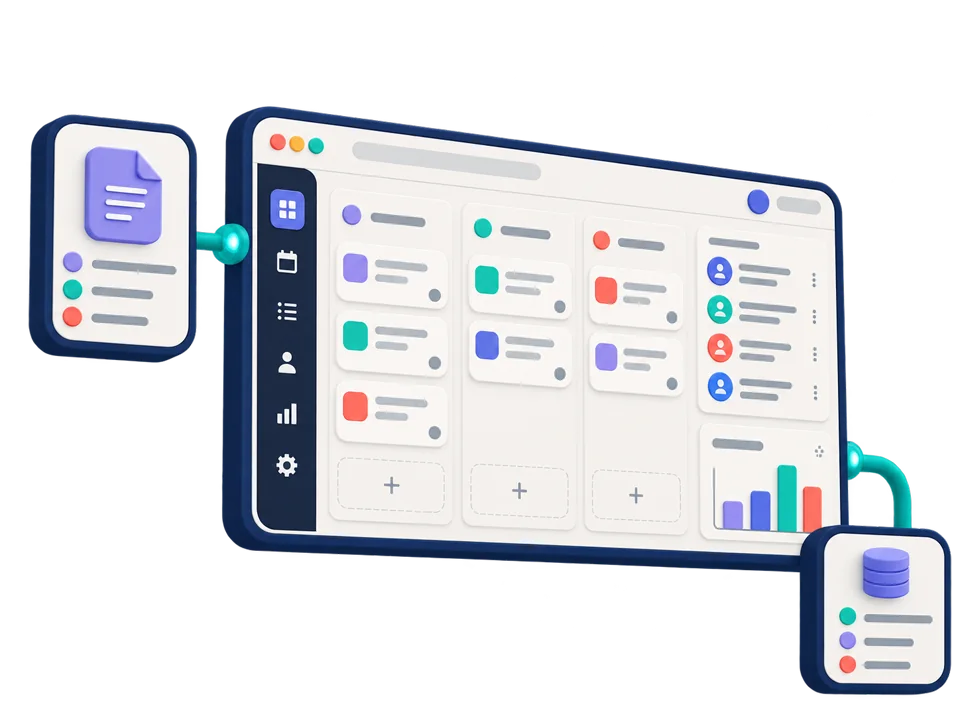
This page presents a conceptual scenario, not a real customer project. It illustrates problem analysis, scope definition, and the choice of evaluation criteria. None of the improvements described are measured results from a real project.
What problems does the current situation create?
Each department has its own definitions and files, reports arrive late, and two people may report different values for the same metric. The problem isn't just the lack of a dashboard: data sources, owners, and update times are unclear too.
Users and stakeholders
Managers, department leads, data entry staff, and those responsible for approval or information quality.
Proposed approach
How does the solution take shape step by step?
First, we define metrics, sources, and data ownership. Then we design collection, permissions, and change history. The dashboard shows only what each role needs and lets users trace figures back to their source.
Real data samples, processes, and constraints must be reviewed before choosing technology. This scenario illustrates only one possible approach.
Conceptual scope
Areas explored in this scenario
This list is not a contractual scope or quotation. First-version features are defined after understanding users and dependencies.
Suggested metrics
How would we measure success in a real project?
Report preparation time
Measure how long collecting and approving reports takes before and after implementation.
Metric consistency
Record discrepancies and corrections caused by differing definitions.
Traceability
The source, timestamp, and changes affecting each data item should be reviewable.
Actual usage
Measure managers' usage and which reports are actually needed.
These metrics are not achieved results. In a real project, they must be defined before implementation and then measured.
Assumptions and risks
What needs investigation before implementation?
- Poor data quality
- No clear metric owner
- Legacy system integration barriers
- Inconsistent departmental definitions
- Incomplete data migration
- Inappropriate access to sensitive data
Business software design and development
Dashboards, workflows, and internal systems designed around real processes, data, and access permissions.