We explain things clearly
We share the reasoning behind decisions and document the guidance needed to use and manage your product.
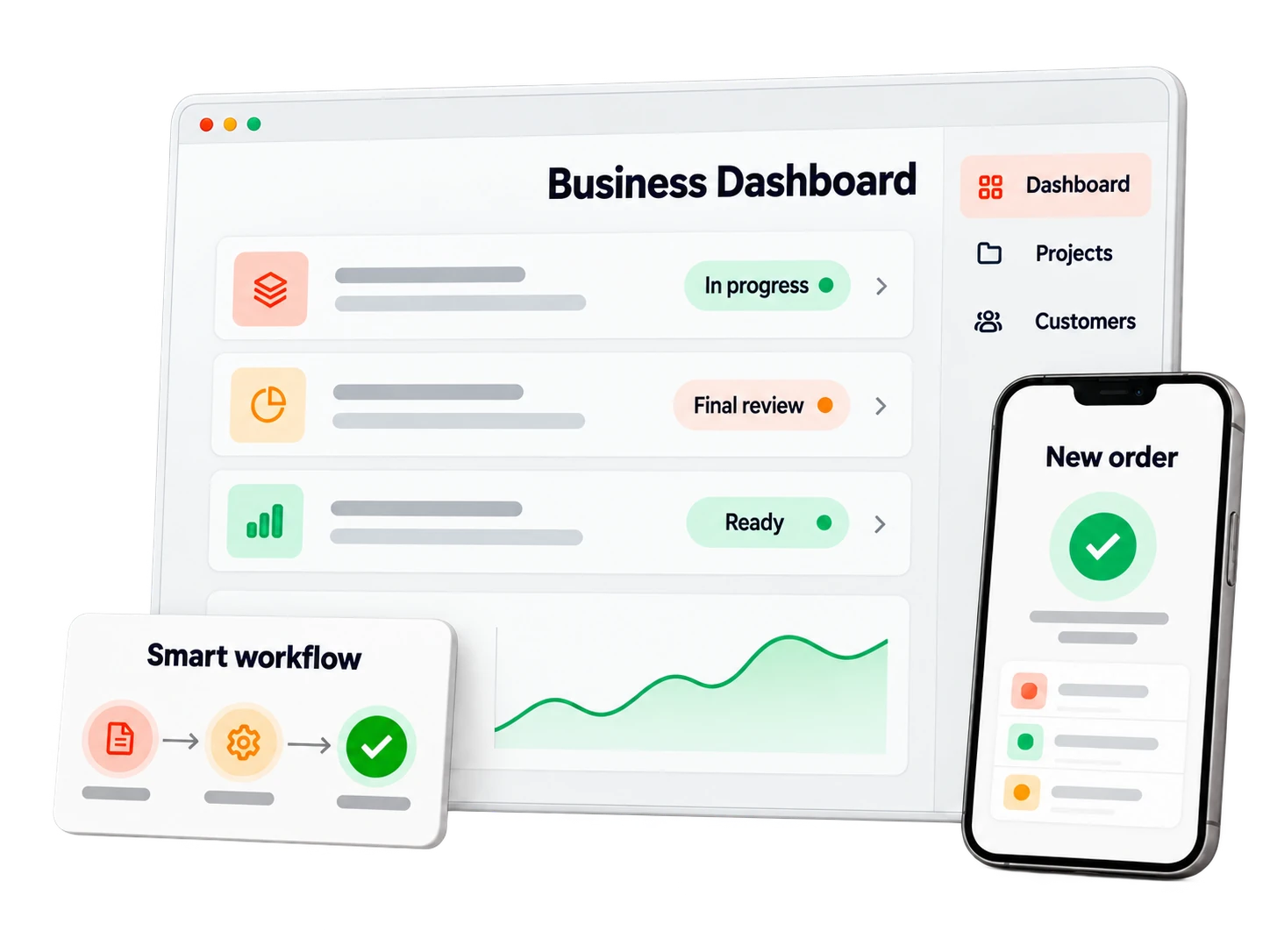
Choosing software should start with the problem to solve, not the name of a technology. You may want to attract more customers, simplify internal work, launch a new idea, or improve an existing product. We first examine your situation, users, and priorities, then determine whether a website, mobile app, custom system, or AI solution is the better fit.
It's fine if you don't yet know exactly what you need. Our role goes beyond writing code. We help clarify requirements, separate essential features from unnecessary ones, and give you a realistic picture of the approach, timeline, and scope before development begins.
Our areas of expertise
Each service can be a complete project on its own or part of a larger product. We choose the solution, technology, and development sequence around the project's needs, not a single formula repeated for every business.
Want to present your services, sell online, or take orders? We build your website and admin panel around those tasks, with a layout that works on phones and content your own team can manage.
We build apps for booking, shopping, or everyday use of your services. Before starting, we explain Android, iOS, and cross-platform options so you can choose with your users and budget in mind.
If your team's information is scattered across files and messages, we help you record and track work in one place. We design the software around your workflow, people's responsibilities, and the reports you need.
From customer responses to document reading and data analysis, we build intelligent solutions for time-consuming tasks. We start with a small prototype to assess whether accuracy and cost suit your work.
We investigate why customers aren't finding your website in search, prioritize technical and content issues, and report on the improvements made, without promising a number-one ranking.
Choosing a solution
Sometimes the problem is clear, but the right type of software isn't. We first examine your goal, current workflow, constraints, and expected outcome. Then we compare suitable options in plain language so you understand the reasoning before spending money.
View the solution selection guide →More sales don't always require a new product. A faster website, simpler ordering, or a better shopping experience may make a bigger difference. In other cases, you may need an online store, CRM, or customer follow-up tool. We first identify where sales opportunities are being lost, then recommend a suitable solution.
We identify where your team spends time re-entering information, moving files, preparing reports, or repeatedly following up. Based on actual needs, we recommend automation, integrations between existing systems, or AI to make work faster, more organized, and less error-prone.
We divide your idea into practical features and stages so the first version can be ready in a reasonable time and tested with real users. This doesn't mean abandoning the bigger vision. It means testing important assumptions before extensive development and using real feedback to guide the next decisions.
Principles behind every project
Software succeeds when people can use it easily, it remains stable in real conditions, and future changes don't leave the business at a dead end. That's why we consider documentation, measurement, security, maintenance, and growth from the start, alongside design and features.
We share the reasoning behind decisions and document the guidance needed to use and manage your product.
From the start, we define what should improve: ordering time, error rates, or ease of use, for example.
We plan access permissions, backups, and error logging from the outset, and test the product before handover.
We build for today's needs while allowing for future features and integrations in the design.
You don't need a technical document or complete feature list before getting in touch. A short description of your business, current problem, and intended outcome is enough to start. After an initial review, we'll discuss practical options, priorities, and the next step.